Best Things to Do in Málaga: A Cultural & Historical Guide for Travelers
Málaga is one of Europe’s oldest continuously inhabited cities — older than Rome and London, founded nearly 3,000 years ago by the Phoenicians. Today, it is a vibrant blend of ancient history, Mediterranean elegance, and relaxed Andalusian lifestyle.
For American travelers 50+, Málaga offers something unique: a safe, walkable, cultured city with warm weather, beautiful architecture, and enough history to fill several days of slow, enjoyable exploration. From Roman ruins to a Renaissance cathedral that took more than two centuries to build, Málaga’s story is written in its streets, plazas, and buildings.
If you are looking for practical information about the airport, transport, car rentals and parking, please visit our dedicated guide: Málaga Practical Travel Guide. This article focuses on the history and cultural highlights of the city centre.
1. Discover Málaga’s Historic Center
The historic center of Málaga is compact, flat, and perfect for relaxed strolls. Yet beneath its beauty lies an extraordinary archaeological timeline:
- Phoenicians laid the city’s first foundations around 800 BC.
- Romans built a theatre and turned Malaca into an important trading port.
- Moors transformed the city between the 8th and 15th centuries.
- Catholics rebuilt Málaga after 1487, shaping much of what we see today.
Walking the Old Town is like peeling back layers of history. Here are some key places that bring the past to life:
Calle Marqués de Larios
Málaga’s most elegant boulevard, built in the late 19th century and inspired by Parisian design. It is one of the cleanest and prettiest pedestrian streets in Spain and a perfect introduction to local life, especially in the late afternoon or evening.
Plaza de la Constitución
The heart of Málaga for centuries — once the site of public ceremonies, parades, and even bullfights. Today, it is lively yet peaceful, ideal for morning coffee and people-watching.
Pasaje de Chinitas
A maze of narrow alleys famous for its 19th-century cafés and literary history. The passageway has been mentioned by Spanish writers and poets and still keeps a traditional atmosphere.
Roman Theatre (Teatro Romano)
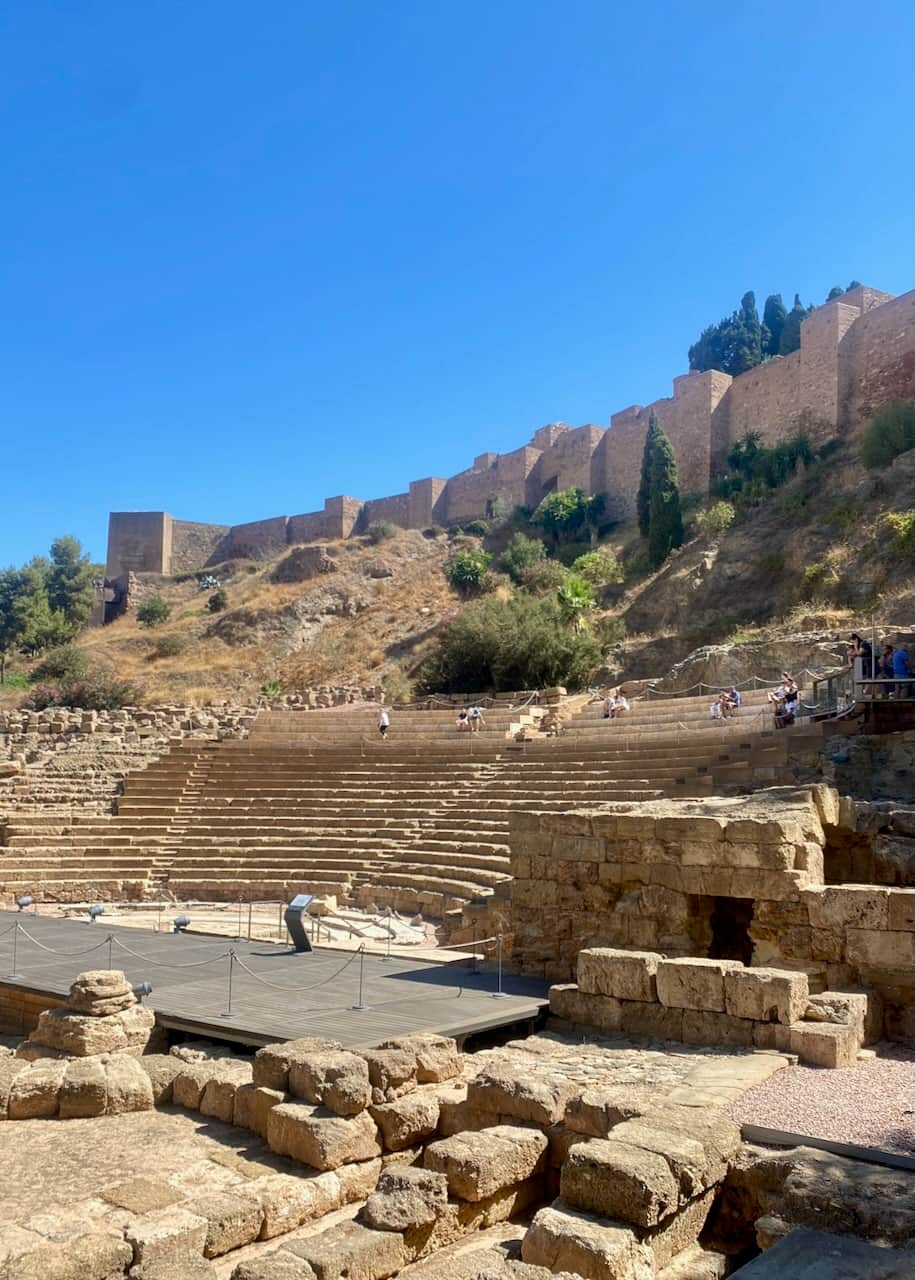
Discovered by accident in 1951, Málaga’s Roman Theatre sits directly beneath the Alcazaba. Dating back to the 1st century BC, it is beautifully preserved and offers a clear glimpse into the city’s Roman past.
Atarazanas Market
A 19th-century iron-and-glass market built on the remains of a Moorish shipyard (atarazana means “dockyard”). The original Nasrid-era archway from the 14th century still stands as the main entrance, blending Islamic architecture with modern market life. Inside, you will find fresh fruit, olives, seafood, cheeses, and local products that show the richness of Andalusian cuisine.
2. Málaga Cathedral — “La Manquita”
Málaga Cathedral, affectionately known as “La Manquita” (“the one-armed lady”), is one of the most remarkable churches in Andalusia.
Why is it called “La Manquita”?
Because one of its two towers was never completed. The story has given rise to many legends, including one claiming that funds were diverted to support the American War of Independence. While this makes a wonderful story, the real reasons were more practical: financial difficulties and political delays. Still, the nickname has stayed and locals speak about the cathedral with affection.
What makes it architecturally unique?
- Construction lasted from 1528 to 1782.
- The building combines Renaissance, Gothic, and Baroque elements.
- It houses one of Spain’s most impressive choir stalls, carved by Pedro de Mena.
- Two enormous 17th-century organs with more than 4,000 pipes dominate the interior.
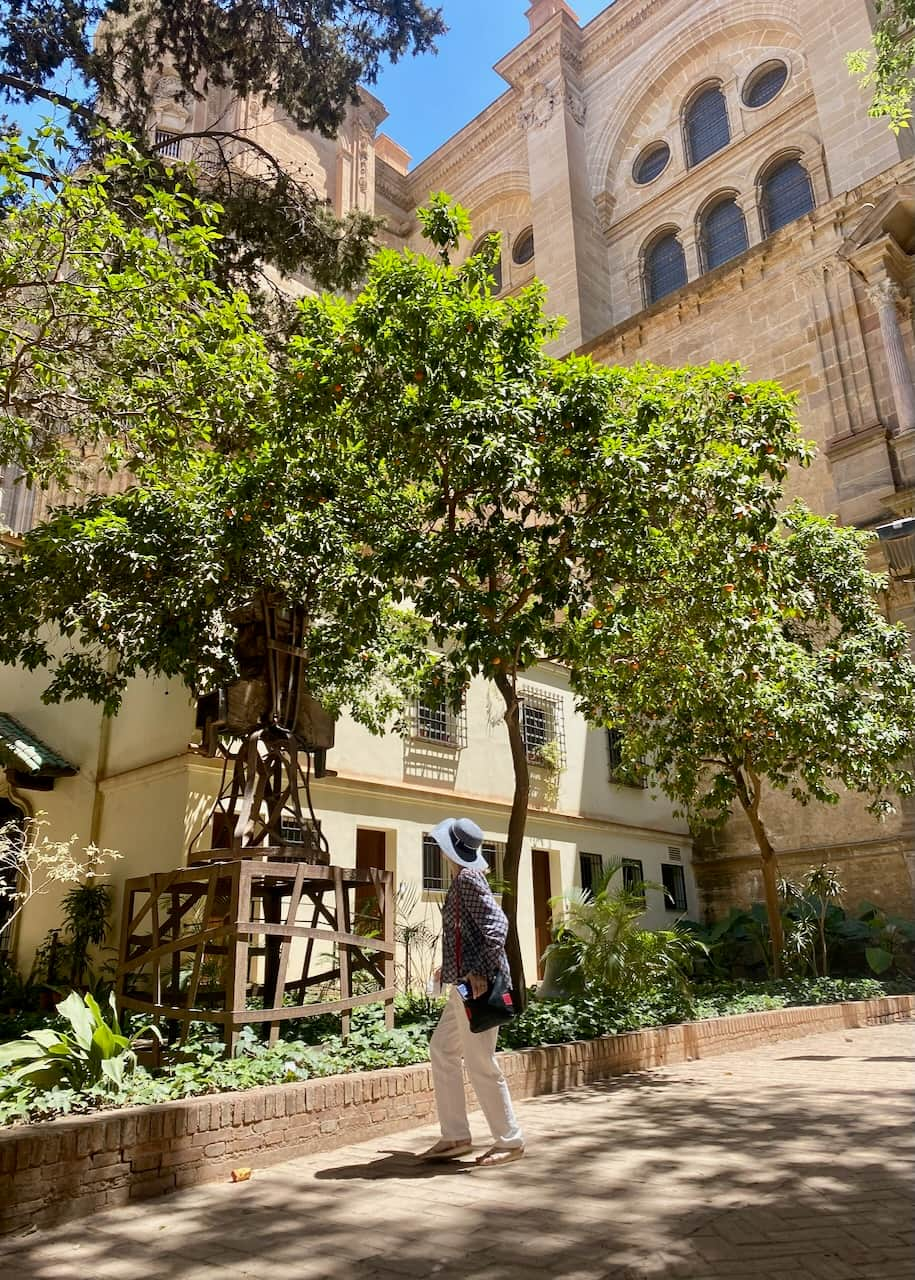
- Peaceful inner patios and chapels allow visitors to step away from the busy streets.
The Rooftop of Málaga Cathedral
One of the most memorable experiences is a visit to the rooftop, where a circular walkway offers a 360° view of the city, the harbour, and the mountains. The perspective shows clearly how the historic center, the port, and the surrounding hills are connected.
🎟 Tickets for Málaga Cathedral & Rooftop
The cathedral stands on the site of the former Great Mosque of Málaga. After the Christian conquest in 1487, the mosque was used as a temporary cathedral before being demolished to make way for the new church. This layered history parallels what happened in Córdoba and Seville, but Málaga’s cathedral remains less crowded and more relaxed to visit.
3. The Alcazaba — Málaga’s Moorish Palace Fortress
Built in the 11th century by the Moors, the Alcazaba is Málaga’s answer to the Alhambra — smaller, more intimate, and with beautiful sea views. It served both as a residence for Muslim rulers and as a defensive fortress designed to protect the city.
Highlights of the Alcazaba
- Horseshoe arches and decorative stonework characteristic of Islamic architecture.
- Shaded courtyards with fountains and gardens inspired by Granada’s Generalife.
- Terraces overlooking the city and the harbour, once used to monitor incoming ships.
- Traces of original 11th-century towers, walls, and tiles.
- The direct connection to the Roman Theatre below, showing how Islamic Málaga was literally built over Roman Malaca.
For visitors who enjoy history, the Alcazaba offers an easily walkable setting with plenty of benches and viewpoints. It is one of the best-preserved Moorish fortifications in Spain and a must-see for anyone interested in Andalusian history.
4. Gibralfaro Castle — The Best View in Málaga
Higher above the Alcazaba stands Gibralfaro Castle, once considered nearly impossible to conquer. In 1487, the Catholic Monarchs laid siege to the castle for months before it finally surrendered.
The castle’s main role was to protect the Alcazaba and control the bay. Today, its long defensive walls form a panoramic walkway with some of the most spectacular views in the city.
Tips for travelers 50+
- To avoid the steep uphill climb, take a taxi to the top entrance.
- Walk along the fortress walls at your own pace, stopping at viewpoints.
- On clear days, you can see far along the Costa del Sol and into the mountains of inland Málaga.
🎟 Tickets for Gibralfaro Castle (combined options with the Alcazaba are available)
5. Picasso’s Málaga — Following the Artist’s Footsteps
Málaga is the birthplace of Pablo Picasso, and traces of his early life can still be felt in the city. For art lovers and curious visitors, this is a chance to understand the environment where the young Picasso grew up.
Picasso Museum Málaga
The Picasso Museum Málaga is housed in a 16th-century palace in the historic center. The collection includes more than 200 works covering almost every phase of the artist’s career. Rather than overwhelming visitors, the museum is clear, well-organised, and easy to enjoy in one visit.
Picasso Birthplace Museum
Just a short walk away, on Plaza de la Merced, is the Picasso Birthplace Museum. Here you can see family photographs, early sketches, letters, and objects from the artist’s childhood home. Together, the two museums offer a complete and intimate picture of Picasso’s roots in Málaga.
🎟 Picasso Birthplace Museum information
6. Carmen Thyssen Museum — Paintings of Andalusian Life
Located in a beautifully restored 16th-century palace, the Carmen Thyssen Museum focuses on 19th-century Spanish and Andalusian painting. The galleries are calm and well-lit, making them ideal for visitors who prefer a quieter, less intense museum experience.
The collection includes colourful village scenes, views of Málaga and other southern cities, as well as depictions of flamenco, festivals, and rural life. It offers a warm, romantic view of Andalusia that perfectly complements the more experimental work of Picasso.
Historical Timeline of Málaga
To better understand how Málaga evolved into the city you see today, here is a simple historical timeline that connects the main periods and places you can still visit.
| Period | Description |
|---|---|
| 800–600 BC Phoenician Foundation |
The Phoenicians establish Malaka as a trading settlement thanks to its natural harbour, salt production, and strategic Mediterranean location. |
| 218 BC – 5th Century AD Roman Málaga (Malaca) |
Rome conquers the region and develops Malaca into a prosperous city with a theatre, thermal baths, fish-salting factories, paved streets, and the status of municipium. |
| 711–1487 Al-Andalus (Islamic Málaga) |
Under Muslim rule, Málaga flourishes as a port city. The Alcazaba is built in the 11th century, and Gibralfaro Castle is expanded in the 14th century. The city becomes a centre of silk production and advanced irrigation systems. |
| 1487 Christian Conquest |
The Catholic Monarchs capture Málaga after a long siege. Mosques are replaced with churches, new religious orders arrive, and Christian institutions reshape the urban landscape. |
| 16th–18th Century Renaissance & Baroque |
Construction of the Cathedral of Málaga begins in 1528 and continues for more than 200 years. The city grows as a commercial port exporting wine, raisins, and olive oil. |
| 19th Century Modern Málaga Takes Shape |
Industrial growth and urban renovation transform the city. The elegant Calle Marqués de Larios is inaugurated in 1891. In 1881, Pablo Picasso is born in Málaga. |
| 20th Century Revival & Urban Development |
After economic challenges, Málaga reinvents itself with cultural investment, restoration of historic buildings, excavation of the Roman Theatre, and revitalisation of the port district. |
| 21st Century Málaga Today |
Málaga becomes one of Spain’s most dynamic cultural destinations, blending ancient heritage with modern museums, renovated public spaces, and a thriving culinary scene. |
Where to Stay in Málaga: A Modern Apartment with Outstanding Views
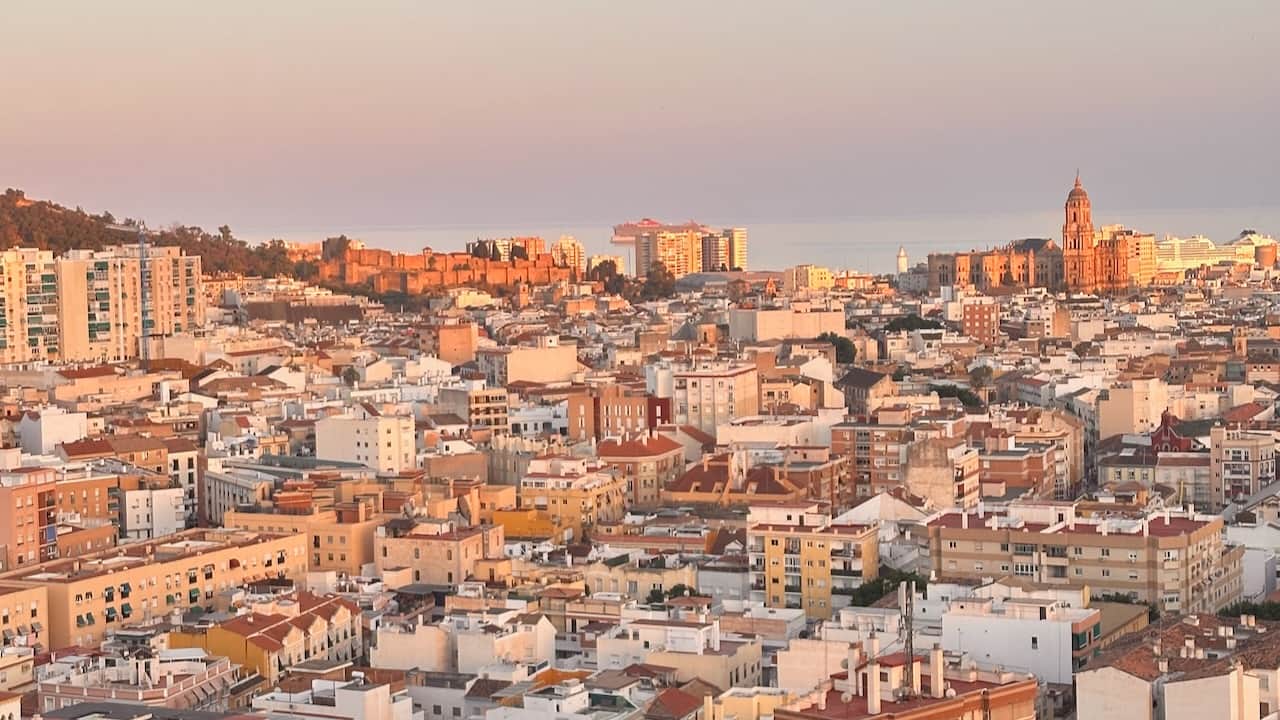
For travelers who want comfort, peace, and beautiful views, our modern apartment on Paseo de Martiricos is an ideal base. Guests love the panoramic views of the city centre, mountains, and the Mediterranean Sea, the rooftop pool, quiet surroundings, and the easy 10-minute walk to the historic center.
👉 Book the Modern Apartment in Málaga with Rooftop Pool
This accommodation is especially appreciated by travelers who want elegance, comfort, and an authentic yet peaceful urban experience while exploring historic Málaga.
For detailed, step-by-step information about how to get from the airport to the city, how to use public transport, where to park and how to rent a car, please read our dedicated article: Málaga Practical Travel Guide.